
Teja Chilli: The Fiery Gem of Guntur
From explosive heat and oleoresin extraction to authentic Andhra cuisine—everything you need to know about the Teja (S17) chilli.
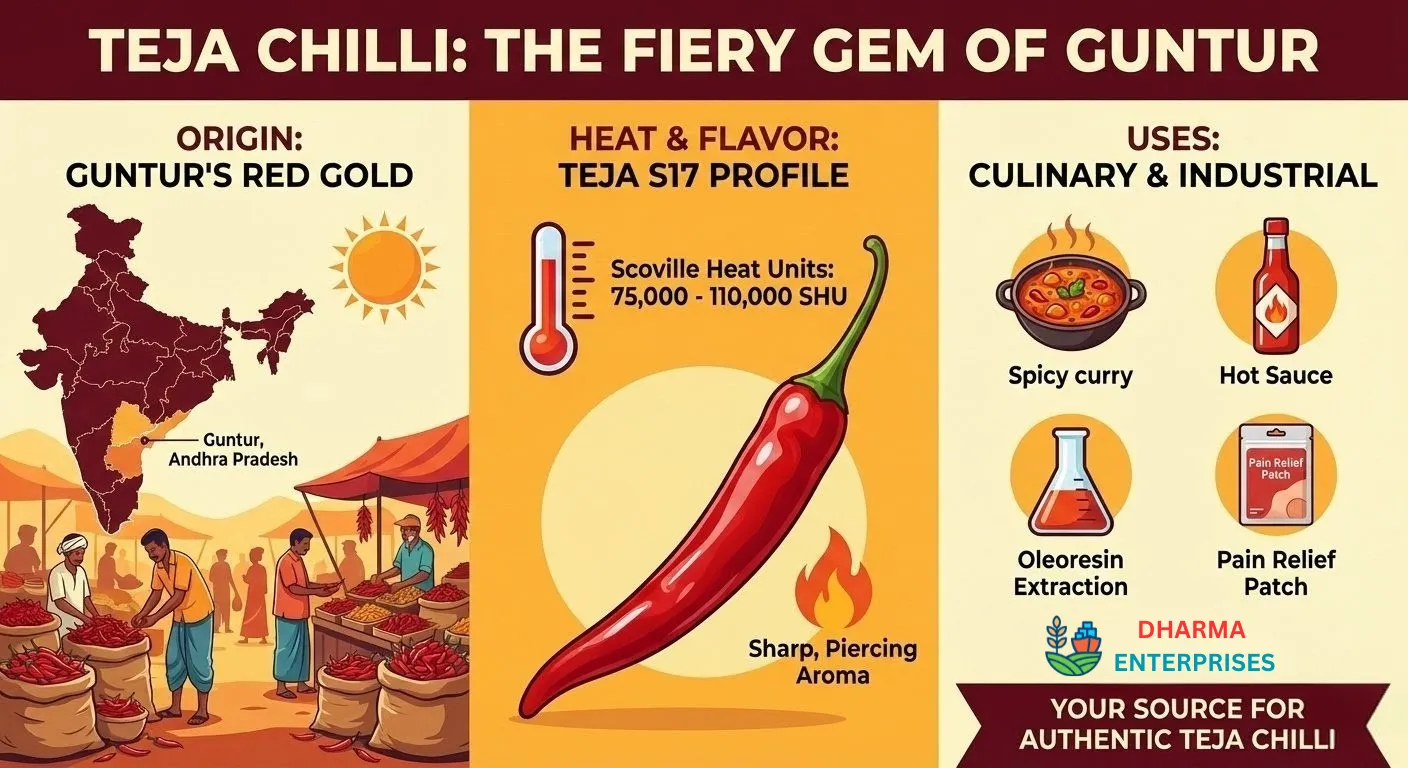
For spice enthusiasts and culinary adventurers, few ingredients command as much respect—and fear—as the Teja chilli. Known scientifically as S17, this fiery pepper is not just a staple of Indian cuisine; it is an agricultural powerhouse that dominates the global spice trade. If you've ever tasted a curry that made your ears ring or a hot sauce that lingered long after the bite, you've likely encountered the potent heat of the Teja.
In this deep dive, we explore everything you need to know about the Teja chilli—from its explosive heat profile to its critical role in global oleoresin extraction.
Historical Background and Origin: The Pride of Andhra
The Teja chilli is synonymous with the Guntur region, the southern Indian state often hailed as the "Chilli Capital of the World." The region is home to the largest chilli market in Asia, and Teja is its crown jewel.
While chillies were introduced to India by the Portuguese in the 15th century, the region's unique Black Cotton Soil and hot, humid climate proved to be the perfect terroir for developing high-pungency varieties. Teja (S17) was developed to meet the demand for a chilli that offered both extreme heat and high oil content, quickly becoming one of the top export varieties from India.
Flavor Profile and Heat Level: A Heavyweight Contender
When we talk about "spicy peppers," Teja is in a league of its own among Indian commercial varieties.
Scoville Heat Units (SHU): Teja is classified as highly pungent, boasting a heat range of 75,000 to 110,000 SHU. To put that in perspective, it is significantly hotter than the popular Jwala or Byadgi varieties.
Appearance: It is a small, slender chilli with a sharp tip and a glossy, deep red skin.
Aroma: Unlike chillies that offer fruity or smoky notes, Teja is known for its sharp, piercing aroma. It doesn't just add heat; it adds a raw, biting pungency that defines the aggressive spice profile of Andhra cuisine.
Did You Know? Because of its intense heat, Teja is often used as a substitute for standard cayenne pepper in industrial spice blends where high potency is required in small doses.
Culinary Uses: From Curries to Chemistry
The culinary footprint of Teja chilli is vast, spanning from grandmother's kitchens to high-tech food processing plants.
1. Authentic Indian Cuisine
From Guntur and the surrounding region, Teja is the secret behind the fiery "Gongura Pachadi" (sorrel leaves chutney) and the infamous "Andhra Chilli Chicken." Its heat is sharp and immediate, making it perfect for tempering (tadka) where the oil needs to be infused with instant spice.
2. International Hot Sauces
Due to its high pungency, global hot sauce manufacturers import Teja to create the base heat for sriracha-style sauces and peri-peri blends.
3. Oleoresin Extraction (The Hidden Use)
Perhaps the most significant commercial use of Teja is not in cooking, but in chemistry. Teja S17 is the preferred variety for extracting Oleoresin Capsicum—a concentrated oil used in:
- Pepper Sprays: Yes, the self-defense spray in your bag likely contains extracts from Teja chillies from Guntur.
- Pharmaceuticals: Used in pain relief patches and balms.
Nutritional and Health Benefits of Chillies
Beyond the burn, the Teja chilli is packed with surprising health benefits, largely due to its high concentration of Capsaicin.
Metabolism Booster: The heat you feel is capsaicin working to raise your body temperature, which can temporarily boost metabolism and aid in burning calories.
Pain Relief: Capsaicin is a key ingredient in topical creams for arthritis and muscle pain. It works by depleting Substance P, a neurotransmitter that sends pain signals to the brain.
Rich in Vitamin C: Like most spicy peppers, Teja is rich in Vitamin C, which supports the immune system—though you'd need a high tolerance to eat enough of them to get your daily dose!
Cultivation and Growing Tips: Growing Teja Chilli
For the green thumbs interested in growing Teja chilli, be warned: this plant loves heat and hates waterlogging.
Climate: Teja thrives in hot, tropical climates with temperatures between 25°C to 35°C. It is extremely sensitive to frost.
Soil: It prefers well-drained, loamy soil rich in organic matter. The "Black Cotton Soil" of the Guntur region is ideal because it retains moisture without becoming waterlogged.
Sowing Season: In India, the crop is typically sown during the Kharif season (June-July) and harvested from December onwards.
Pest Management: The plant is susceptible to pests like thrips and mites. Commercial farmers often use integrated pest management, but home growers can use neem oil as a natural deterrent.
Conclusion: The King of Heat
The Teja chilli is more than just a spice; it is an economic engine for India and a flavour bomb for the world. Whether you are a chef looking to add authentic fire to your vindaloo, or an importer sourcing the best raw material for oleoresin, Teja S17 stands unrivaled.
Next time you see a "Very Spicy" warning on a menu, remember the humble yet potent Teja chilli—the tiny red pepper that powers the punch.
Ready to bring the heat to your kitchen or business?
Explore the authentic taste of Guntur with Teja chillies. Contact Dharma Enterprises for a quotation and to book your bulk supply.
Get a quote now